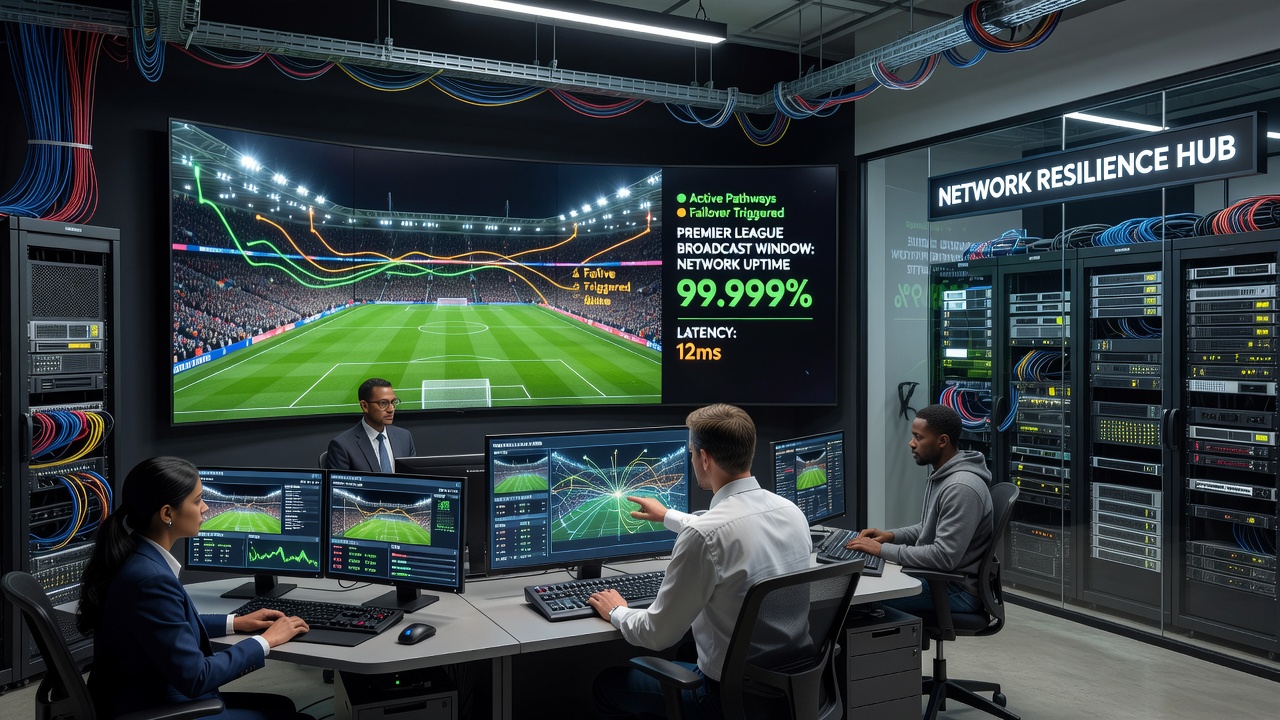
Behind the Curtain of Network Resilience During High-Stakes Premier League Broadcast Windows
Premier League matches draw millions of simultaneous viewers across the UK and international markets, placing intense demands on underlying network infrastructure that must handle traffic spikes without interruption. Broadcasters and telecommunications providers coordinate layered systems to maintain signal integrity from stadium cameras through to end-user devices, and these operations run on precise timing that aligns with kickoff schedules throughout the season.
Infrastructure Foundations Supporting Live Coverage
Multiple fiber optic routes connect major stadiums to central production hubs, while content delivery networks distribute encoded streams to regional edge servers that cache data closer to viewers. Studies from telecommunications research groups indicate that peak viewing periods for top fixtures can generate data volumes exceeding several terabits per second, requiring dynamic routing protocols that shift loads across redundant paths when congestion appears. Equipment from vendors such as Nokia and Ericsson forms the backbone for many of these links, and operators run continuous health checks that flag latency increases before they affect picture quality.
During the opening weeks of each campaign, including the September 2026 schedule that features several high-profile derbies, planners allocate extra capacity on both fixed and mobile networks. Data from industry reports shows that mobile operators activate additional spectrum bands in urban centers to accommodate the surge in app-based streaming, and these adjustments occur hours before the first whistle.
Bandwidth Allocation and Traffic Management
Algorithms monitor real-time viewer counts and automatically adjust encoding bitrates across regions, ensuring that households on varying connection speeds receive stable feeds. When multiple matches overlap on a Saturday afternoon, traffic management systems prioritize live content over on-demand services, and this prioritization relies on deep packet inspection combined with machine learning models trained on historical match-day patterns.
One documented approach involves pre-positioning video segments at thousands of cache points so that only small metadata updates travel the full distance during live play. Research published by the European Telecommunications Standards Institute highlights how such techniques reduce core network strain by up to 70 percent during comparable events, allowing operators to maintain headroom for unexpected spikes caused by goal celebrations or VAR reviews.
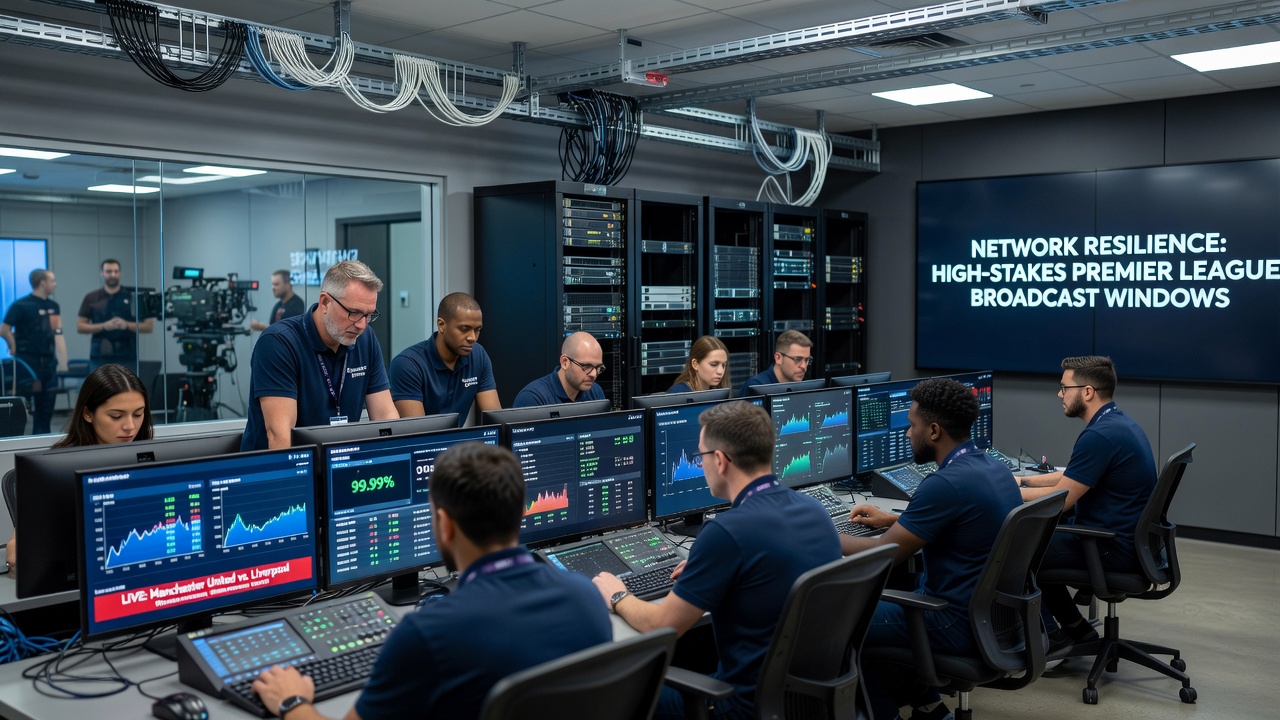
Redundancy Protocols and Failover Procedures
Primary transmission paths run alongside satellite and microwave backups that activate within milliseconds of any detected fault. Engineers at control centers track signal-to-noise ratios across all routes, and when thresholds drop they trigger automatic rerouting that viewers rarely notice. According to performance data released by Ofcom in its annual connectivity assessments, UK fixed broadband services achieved 99.9 percent uptime during the 2025-26 season, yet the margin for error remains narrow when a single fixture commands national attention.
Teams conduct unannounced drills throughout the year, simulating fiber cuts or power losses at key nodes. These exercises reveal how quickly traffic can shift to alternate carriers, and they also expose gaps in cross-provider coordination that require further refinement. In September 2026, several matches will test updated 5G standalone cores that promise lower latency for mobile viewers, and operators have already mapped out contingency routes in case legacy equipment experiences overload.
Emerging Pressures and Adaptation Strategies
International audiences add another layer of complexity because streams traverse undersea cables that can experience variable performance based on global usage. Content providers therefore maintain multiple ingress points into each territory, and they monitor submarine cable health through partnerships with cable operators. A report from the GSMA on mobile traffic growth notes that live sports events continue to drive the largest single-day increases in data consumption across Europe, prompting ongoing investment in both terrestrial and non-terrestrial networks.
Security measures also form part of resilience planning, with distributed denial-of-service mitigation systems standing ready to absorb malicious traffic aimed at broadcast endpoints. These defenses operate in parallel with quality-of-service rules that guarantee bandwidth for authorized streams even when background noise rises.
Conclusion
Network resilience for Premier League broadcasts rests on a combination of physical infrastructure, intelligent traffic management, and practiced failover routines that together absorb the intense demands of peak windows. As the September 2026 fixtures approach, the same frameworks will undergo further validation, with operators refining capacity forecasts and testing new spectrum allocations. Observers note that continued coordination between broadcasters, carriers, and standards bodies sustains the uninterrupted delivery audiences expect, and the data patterns from previous seasons provide the baseline for those ongoing adjustments.