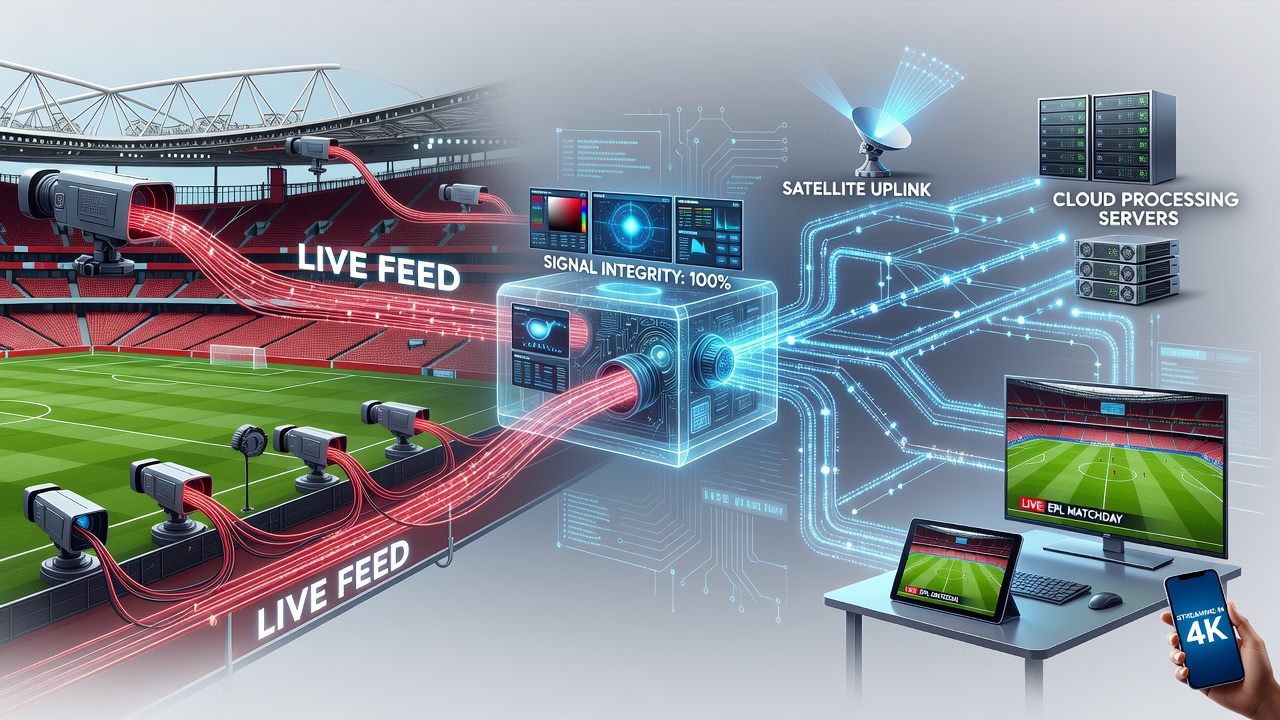
Tracing Signal Pathways from Stadium Cameras to Viewer Screens During Major English League Encounters
Signal pathways in major English league encounters begin at multiple high-definition cameras positioned around the pitch and stands, where operators capture raw footage at frame rates of 50 or 60 frames per second in 4K resolution, and these feeds move immediately through fiber optic cables to on-site production trucks equipped with vision mixers and replay servers.
Initial Capture and On-Site Processing
Researchers from broadcast engineering teams have documented how camera signals travel first via triaxial or SMPTE fiber links that maintain uncompressed video integrity over distances of several hundred meters, while audio from pitch-side microphones joins the stream through separate AES/EBU digital lines; synchronization occurs at this stage using timecode generators locked to GPS references so that all angles align precisely during later mixing. Observers note that in venues hosting Premier League fixtures, up to 30 cameras operate simultaneously, generating more than 10 gigabits per second of data that must be routed without latency spikes exceeding a few milliseconds.
Transmission from the Venue
Once processed on site, the combined program feed exits the stadium through dedicated fiber connections leased from national carriers or via microwave links when fiber routes face capacity limits, and these signals reach primary broadcast centers such as those operated by Sky Sports or BT Sport within milliseconds. Data shows that satellite uplinks supplement terrestrial paths during peak fixtures, with encoders compressing the stream into contribution-quality formats like JPEG 2000 before it travels to geostationary satellites positioned over Europe; according to industry reports from the Society of Motion Picture and Television Engineers, this hybrid approach ensures redundancy when one pathway experiences weather-related attenuation.
Central Distribution and International Routing
At the central broadcast hub, technicians apply final graphics overlays, replays, and commentary tracks before the signal splits into multiple distribution formats for domestic and overseas audiences. One study revealed that fiber networks operated by BT and Virgin Media carry the majority of UK domestic feeds to regional headends, whereas international rights holders receive clean international signals via dedicated IP circuits or satellite downlinks. In October 2026, several English league matches incorporated test transmissions of higher frame rate 1080p HDR alongside standard 4K deliveries, allowing platforms to evaluate bandwidth demands during simultaneous fixture windows.
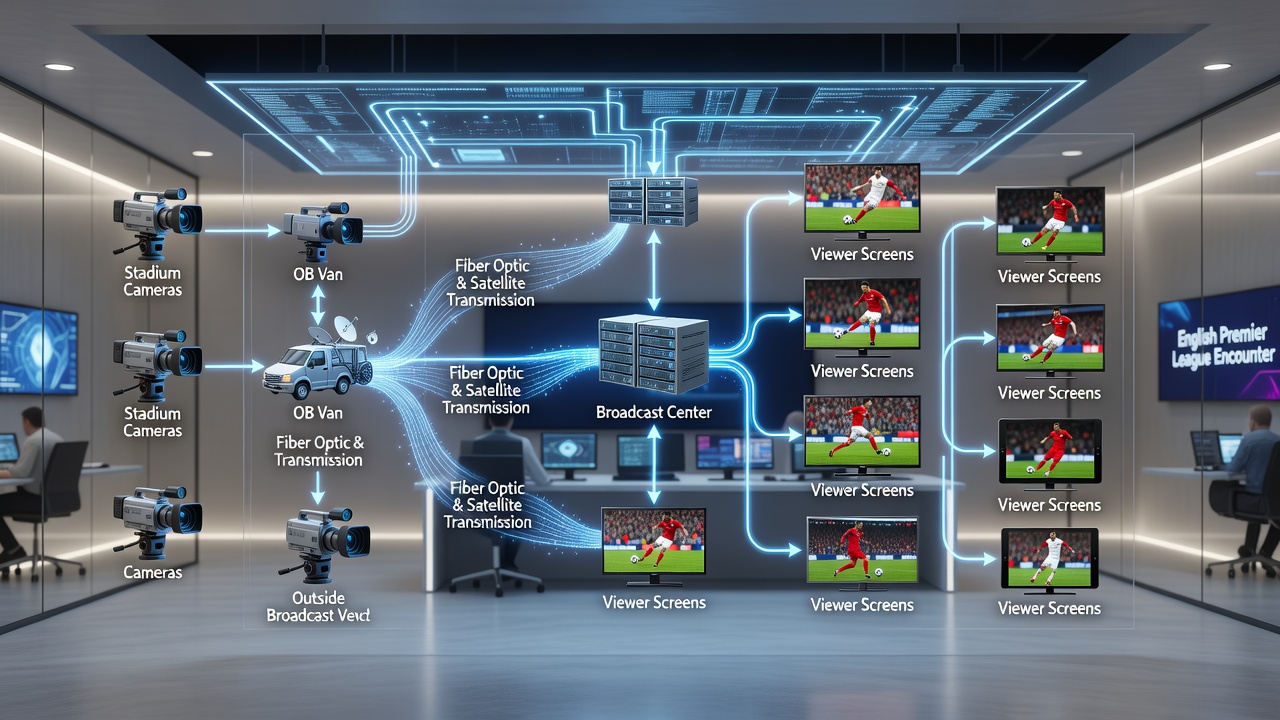
What's notable is how content delivery networks then replicate these streams across edge servers so that streaming services and traditional cable operators receive identical source material; figures from European regulatory filings indicate average end-to-end latency from camera to viewer screen now sits between four and eight seconds for live linear broadcasts, with over-the-top platforms sometimes adding additional seconds due to adaptive bitrate adjustments.
Final Delivery to Viewer Screens
Viewers receive the signal through set-top boxes, smart televisions, or mobile applications that decode the compressed transport stream and render it on displays ranging from 50-inch 4K panels to handheld devices. Research indicates that cable providers in the UK convert the incoming feed into QAM-modulated channels for legacy systems, while IPTV and OTT services use MPEG-DASH or HLS protocols to adapt quality based on available bandwidth. Those monitoring the pathway emphasize that last-mile infrastructure, including DOCSIS 3.1 cable modems and FTTP fiber connections, determines whether households experience consistent 4K playback or fall back to HD during congestion events.
Take the example of a typical Saturday afternoon fixture where signals from two separate stadia converge at a central playout facility before distribution to millions of screens across the UK and abroad; experts have observed that automated monitoring systems flag any packet loss or timing drift within seconds, triggering failover to backup encoders without interrupting the broadcast. And because English league rights extend to numerous territories, the same core feed undergoes regional customization such as alternate commentary languages or localized advertising insertions at various points along the chain.
Conclusion
The complete pathway from stadium cameras to viewer screens relies on layered technologies that combine fiber optics, satellite transmission, IP distribution, and adaptive decoding to deliver synchronized live coverage of major English league encounters. Data from broadcast operators confirms that these systems handle increasing resolution and frame rates while maintaining reliability across domestic and international networks, and continued infrastructure upgrades support the growing volume of simultaneous matches each weekend.